
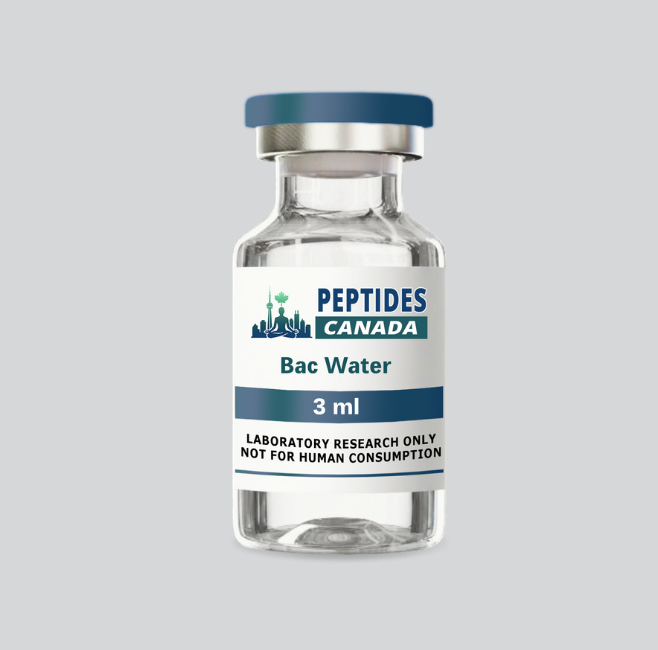
BAC Water
About BAC Water
BAC water works as a preservative. The benzyl alcohol (C₇H₈O) content is an aromatic alcohol used as a bacteriostatic preservative that functions as a bacteriostatic agent, meaning it prevents or slows bacterial growth rather than directly killing bacteria. This is an important distinction because BAC water is designed to inhibit bacterial replication, not sterilize a solution.
Its primary action involves disrupting bacterial cell membranes. These membranes are made up of phospholipid bilayers that act as flexible protective barriers around the cell. Benzyl alcohol integrates into the membrane structure by increasing membrane fluidity and permeability. As a result, the bacteria lose their ability to maintain stable electrochemical gradients, which are essential for regulating ion balance and powering cellular metabolism. When these gradients are disrupted, energy production becomes impaired and bacterial replication is significantly reduced.
At a 0.9% concentration, benzyl alcohol is widely used as an antimicrobial preservative in peptide and protein formulations. It is not known to directly cleave peptide bonds under normal conditions. However, studies have shown that benzyl alcohol can induce aggregation and precipitation in some proteins, so compatibility should be evaluated for each peptide and experimental application individually.