
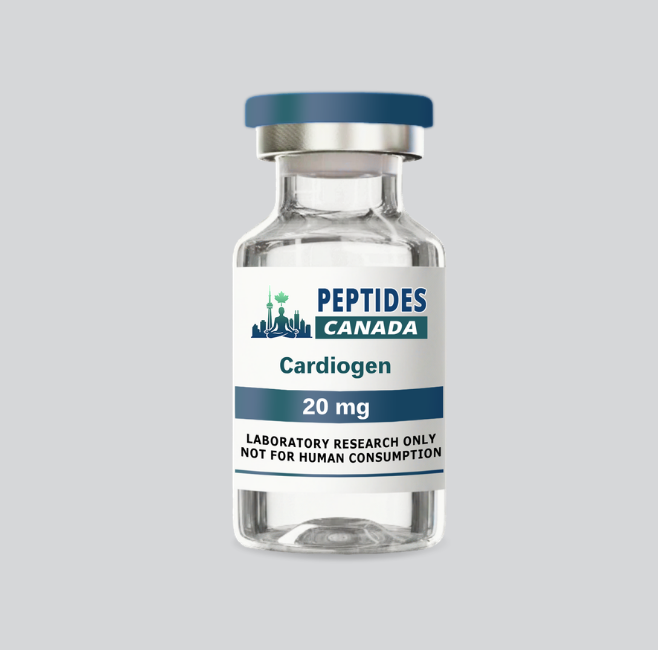
Cardiogen
About Cardiogen
Cardiogen belongs to a class of short-chain synthetic peptides described as a bioregulator research framework developed to investigate tissue-specific regulatory processes at the cellular and genetic levels. Experimental studies have examined its interaction with cardiac cell populations and its potential influence on transcriptional activity associated with cardiovascular tissue maintenance, primarily in in vitro and animal models.
Current research continues to evaluate Cardiogen’s molecular stability, tissue-selective bioregulatory properties, and potential role in peptide-driven cellular communication, mainly within preclinical research programs rather than ongoing widely distributed international clinical research initiatives. Ongoing studies focus on understanding its mechanisms of action, transcriptional regulation behaviour, and broader applications in cardiovascular and molecular biology research in experimental model systems rather than established clinical pathways.