
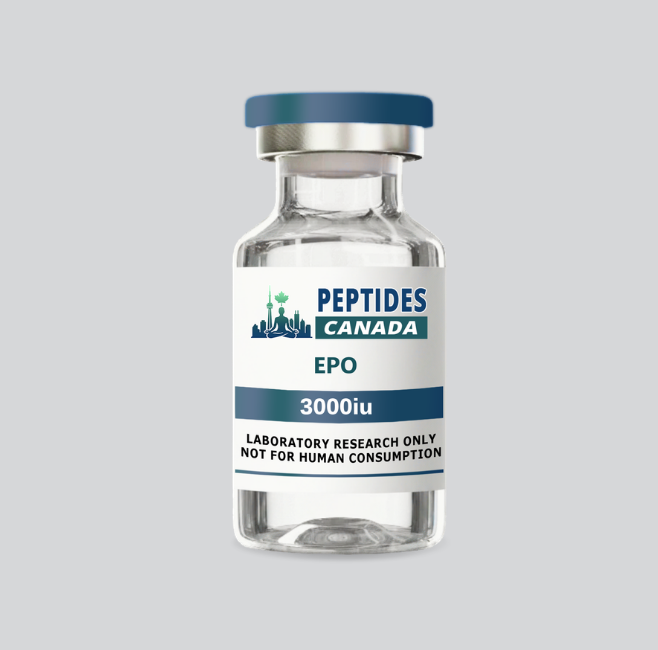
EPO
About EPO
Erythropoietin is primarily produced by the kidneys in response to reduced oxygen availability in tissues. Its biological activity is mediated by interactions with erythropoietin receptors on erythroid progenitor cells, thereby helping regulate cellular proliferation, differentiation, and survival.
Experimental research has explored EPO’s involvement in signalling pathways related to red blood cell maturation, gene transcription, and cellular responses to hypoxic conditions. Studies have also investigated EPOR-mediated signalling, including JAK2/STAT5-related pathways, and molecular mechanisms associated with tissue oxygen delivery and adaptation under controlled laboratory conditions.
Current research continues to evaluate EPO’s receptor-mediated activity, downstream signalling behaviour, and context-dependent biological functions that extend beyond erythropoiesis.
Research applications include:
- Erythropoiesis and red blood cell development studies
- Hematopoietic signalling pathway research
- Hypoxia-response mechanism investigations
- Erythropoietin receptor activity analysis
- Cellular adaptation and oxygen transport studies
- Molecular hematology research