
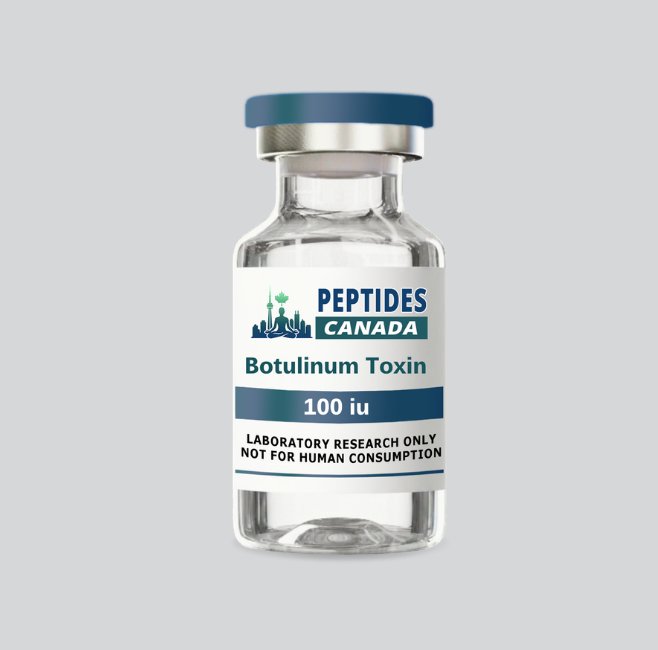
Botulinum Toxin
About Botulinum Toxin
Botulinum toxin is a purified neurotoxin derived from the bacterium Clostridium botulinum. In clinical settings, 100 IU is a commonly used dose for applications such as muscle spasm treatment, chronic migraine management, and cosmetic procedures aimed at reducing facial wrinkles. Its mechanism of action involves blocking the release of acetylcholine at nerve endings. Rather than simply relaxing muscles, the toxin interrupts nerve signalling at the molecular level.
Botulinum toxin is commonly studied in areas including:
- Neurological pathway research
- Neurotransmitter release mechanisms
- Pharmaceutical development studies
- Cellular signalling investigations
Botulinum toxin is a 150 kDa protein that cleaves SNAP-25, an essential protein involved in acetylcholine release at the neuromuscular junction. Without acetylcholine signalling, muscles cannot contract, resulting in effects that last 3 to 6 months until new nerve connections regenerate through a process known as neural plasticity.