
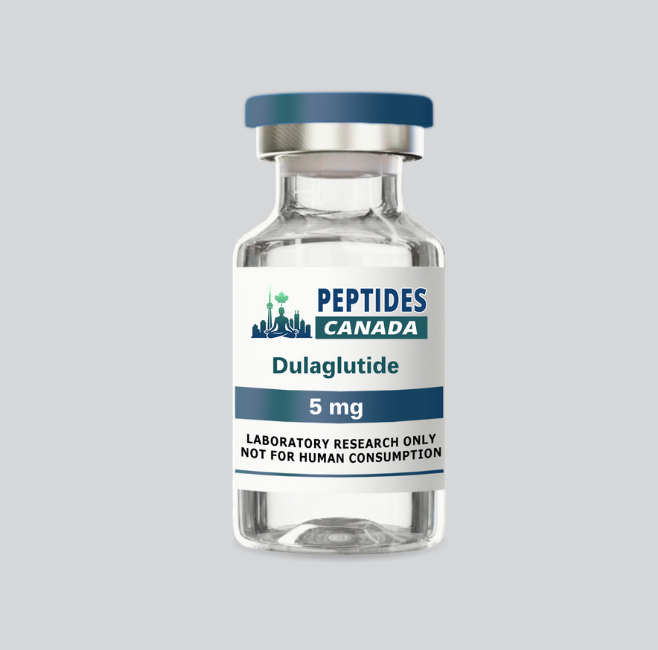
Dulaglutide
About Dulaglutide
Dulaglutide is an IgG4-Fc fusion protein consisting of two GLP-1 receptor agonist peptide chains derived from GLP-1(7–37) linked to a human IgG4 Fc region via peptide linkers. The Fc region contains the S228P mutation, which stabilizes the molecule by reducing antibody hinge region exchange.
Its extended half-life is primarily mediated through FcRn-dependent recycling in endothelial cells. Structurally, dulaglutide is classified as an Fc-fusion biologic, distinguishing it from lipidated GLP-1 analogs such as liraglutide and semaglutide.
Dulaglutide works by binding to GLP-1 receptors on pancreatic beta cells, where it enhances glucose-dependent insulin secretion. Insulin is released only when blood glucose levels are elevated, helping reduce the risk of hypoglycemia.
It also suppresses glucagon release from pancreatic alpha cells, which leads to decreased hepatic glucose production. In addition, dulaglutide slows gastric emptying to help reduce post-meal blood sugar spikes and activates central GLP-1 receptors in the hypothalamus.